

11 Dead, 41 Injured: Alarming Rise in Wildlife Attacks in Chitwan in 2081/82
In the fiscal year 2081/82 B.S. (2024–2025), Chitwan National Park witnessed a disturbing surge in human-wildlife conflict, marking a stark reminder of the fragile relationship between rural communities and the wild.
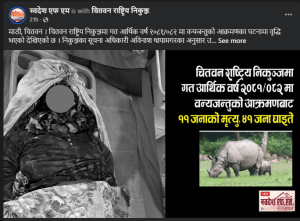
According to Abinash Thapamagar, the Information Officer at Chitwan National Park, 11 people lost their lives and 41 others were injured in wildlife attacks over the past year. Of the fatalities, 8 were caused by rhinos, 2 by elephants, and 1 by a tiger. Among the injured, 32 sustained serious injuries, while 9 were reported as minor.
The Hidden Cost of Coexistence
Most victims were local residents who had entered park areas or community forests to collect grass or forest products like wild vegetables (niguro). This highlights a deeper reality: the communities most affected by wildlife are also those most reliant on forests for daily survival.
The park’s data reveals a troubling long-term pattern. In the past five years alone, 73 people have died and 169 have been injured due to animal attacks. The year 2078/79 B.S. (2021–2022) was particularly deadly, with 30 human fatalities, 21 of which were caused by tigers.
Loss Beyond Human Life
Human-wildlife conflict also affects livelihoods. Last year, 179 domestic animals were killed, including 140 by leopards, 37 by tigers, and 2 by pythons. In addition, 23 homes were damaged by elephants, with 13 of those damages occurring in grain storage areas, resulting in further food insecurity.
These incidents are not just statistics — they represent lives disrupted, families mourning, and communities living in fear. People are often left without compensation, protection, or proactive tools to prevent future attacks.
Park Authorities Respond
In response, Chitwan National Park has initiated awareness programs and begun installing mesh fencing around vulnerable settlements. While these steps are commendable, they alone are not sufficient. As human settlements expand and animal habitats shrink, the frequency and intensity of these conflicts are likely to rise.
What Needs to Change?
These alarming figures reinforce the urgent need for smarter, community-driven solutions. Technologies like Bitflux Innovations’ Kawach system offer proactive protection by detecting wildlife movement and triggering deterrents such as light and sound. Its IoT-enabled version, Kawach Sense, can even send real-time alerts to help communities act quickly.
The situation in Chitwan is a wake-up call. We must shift from reactive to preventive measures — combining education, infrastructure, and innovation to create safer environments for both people and wildlife.
#Chitwan #WildlifeConflicts #HumanWildlifeConflict #Nepal #Kawach #BitfluxInnovations #Conservation #CommunitySafety
